


In today’s interconnected world, GPS technology plays a pivotal role in navigation, mapping, and location-based services. While standard GPS provides location data within a few meters, high-accuracy precision gps systems deliver pinpoint accuracy down to centimeters, enabling applications in surveying, agriculture, autonomous vehicles, and more. Understanding the science behind this technology helps explain why it has become a cornerstone of modern geolocation solutions.
How GPS Works: The Basics
Global Positioning System (GPS) relies on a network of satellites orbiting Earth. Each satellite continuously broadcasts signals containing its position and the precise time the signal was sent. A GPS receiver on the ground calculates its distance from at least four satellites by measuring the time it takes for signals to reach it. Using this data, the receiver determines its location through a process called trilateration.
While standard GPS is sufficient for most navigation needs, achieving centimeter-level accuracy requires additional techniques and corrections. This is where the science behind high-accuracy precision GPS comes into play.
Techniques for Achieving High Accuracy
1. Differential GPS (DGPS)
Differential GPS is a technique that compares the GPS signals received at a known reference station to those at the user’s location. By identifying errors caused by atmospheric conditions or satellite clock discrepancies, DGPS can correct the user’s position, reducing errors from meters to decimeters.
2. Real-Time Kinematic (RTK) Positioning
RTK positioning is a method that enhances GPS accuracy by using carrier phase measurements of satellite signals. A base station provides real-time corrections to a mobile receiver, achieving centimeter-level accuracy. RTK is widely used in construction, precision agriculture, and surveying, where precise positioning is critical.
3. Satellite-Based Augmentation Systems (SBAS)
SBAS, such as WAAS (Wide Area Augmentation System) and EGNOS (European Geostationary Navigation Overlay Service), provide additional satellite signals and corrections to improve GPS accuracy. These systems compensate for atmospheric disturbances, satellite orbit errors, and timing discrepancies.
Factors Affecting GPS Accuracy
Even with advanced techniques, several factors can influence the performance of high-accuracy GPS systems:
- Atmospheric Conditions: Ionospheric and tropospheric delays can affect signal travel time.
- Multipath Effects: Signals reflected off buildings or terrain can distort position calculations.
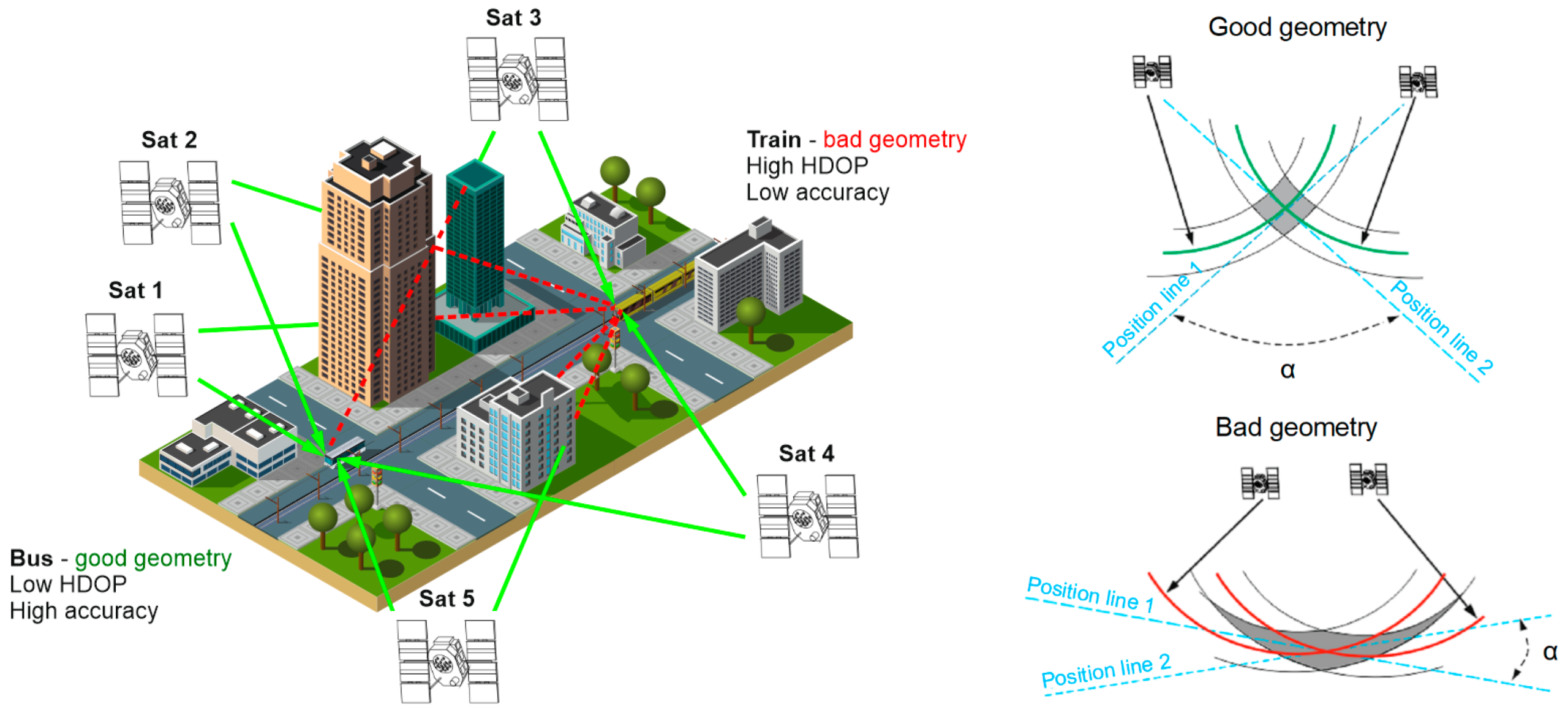
- Satellite Geometry: Poor satellite alignment can reduce accuracy, a concept known as Geometric Dilution of Precision (GDOP).
Understanding these factors helps engineers and users optimize GPS performance for critical applications.
Applications of High-Accuracy Precision GPS
The science behind high-accuracy precision GPS enables a wide range of industries to operate more efficiently:
- Autonomous Vehicles: Precise GPS allows vehicles to navigate safely without human input.
- Agriculture: Farmers use GPS for precision planting, fertilization, and harvesting.
- Surveying and Mapping: Land surveyors achieve highly accurate measurements for construction and infrastructure projects.
- Drones and UAVs: Accurate positioning enhances stability, safety, and mission planning.
Conclusion
The science behind high-accuracy precision GPS combines satellite technology, signal correction techniques, and sophisticated algorithms to provide unparalleled location precision. As demand for accurate geospatial data grows, understanding these systems becomes increasingly important for industries ranging from transportation to agriculture. By leveraging methods like DGPS, RTK, and SBAS, users can achieve remarkable positioning accuracy, revolutionizing how we navigate and interact with the world.
